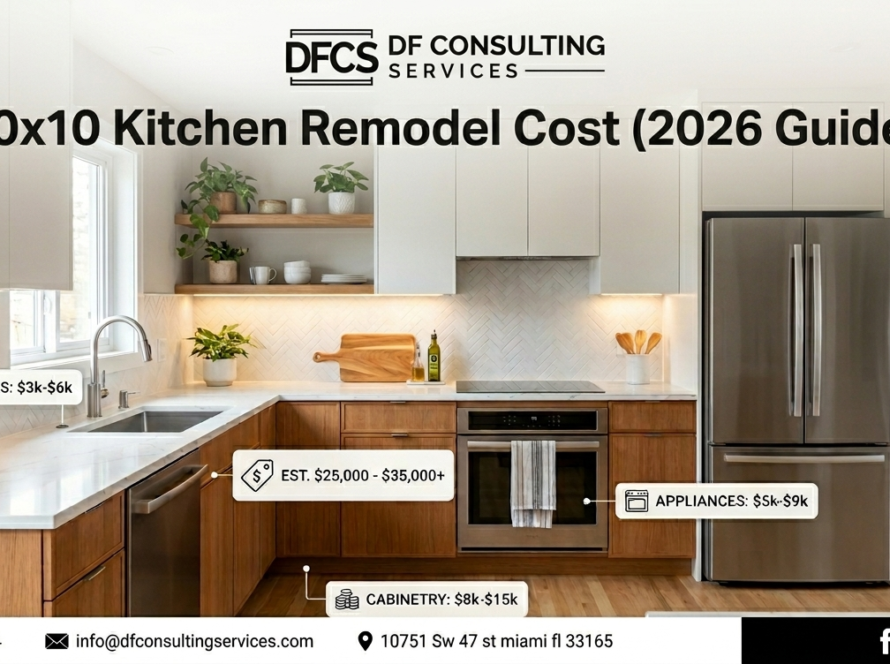
If you own a split-level home, you already know the kitchen can feel like an afterthought cramped, closed off, and frozen somewhere in the 1970s. Furthermore, a split level home kitchen remodel is one of the highest-impact upgrades you can make, both for your daily living and your property value However these projects come with unique challenges that standard kitchen remodels simply don’t face: structural barriers, tricky floor transitions, and layouts that were never designed with modern living in mind. This complete 2026 guide covers everything — kitchen remodel ideas for split level homes, realistic costs, design trends, and a step-by-step process — so you can walk into your split level house kitchen remodel with confidence.
What Is a Split Level Kitchen Layout?
A split-level home is a style of residential architecture where the floor levels are staggered — typically offset by a half-floor — instead of stacked in a traditional two-story arrangement. The kitchen in a split-level house is usually tucked between the entry level and the upper living area, creating a sense of separation from the rest of the home.
Originally popular in the 1950s through 1980s for their affordability and efficient use of sloped lots, split-level kitchens were designed for a different era of cooking and entertaining. Today, they often feel disconnected, dated, and functionally limiting compared to the open-concept layouts modern homeowners expect. That is why split level home kitchen remodels have become one of the fastest-growing renovation categories — homeowners are reclaiming these spaces and transforming them entirely.
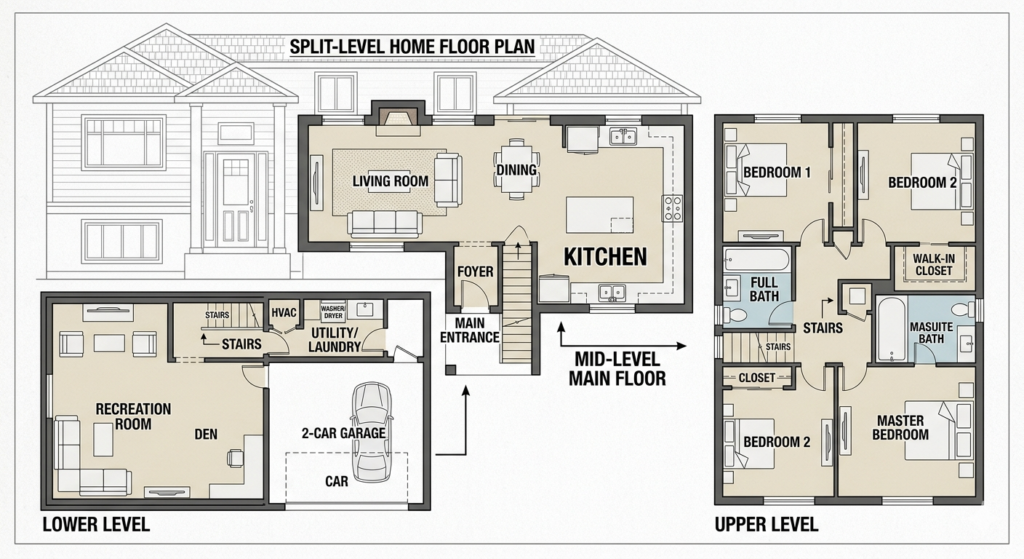
Here is what makes a split-level kitchen unique:
- Multiple floor levels create visual and physical barriers between spaces
- Separated living and kitchen areas limit sightlines and social flow
- Limited natural light due to smaller windows and enclosed walls
- Structural elements like load-bearing walls make changes complex
- Older finishes and layouts that no longer match modern design standards
Common Problems in Split Level Kitchen Remodel Projects
Before diving into ideas, it is important to understand what you are working with. Split-level kitchen remodels consistently run into a set of recurring pain points that require thoughtful planning to overcome.
Common challenges homeowners face:
- Closed-off layout — walls blocking the kitchen from living and dining areas
- Poor lighting — lack of windows, low ceilings, and inadequate artificial lighting
- Limited counter space — original designs prioritized small footprints
- Structural limitations — load-bearing walls and beams that restrict layout changes
- Outdated design — cabinets, flooring, and finishes from decades past
- Awkward transitions — level changes make flooring and traffic flow difficult
- Plumbing and electrical constraints — repositioning major systems adds cost
Split Level Kitchen Remodel Ideas That Actually Work
The best kitchen remodel ideas for split level homes share a common theme: they work with the existing structure while maximizing openness, light, and usability. Whether you are searching for a dramatic split level kitchen remodel before and after transformation or a more modest upgrade, these split level home kitchen remodel ideas are the most effective approaches homeowners and designers are using in 2026.
Open Concept Conversion
The single most transformative upgrade for a split-level kitchen is converting it to an open concept layout. This typically involves removing the wall separating the kitchen from the dining or living area, creating a flowing, social space.
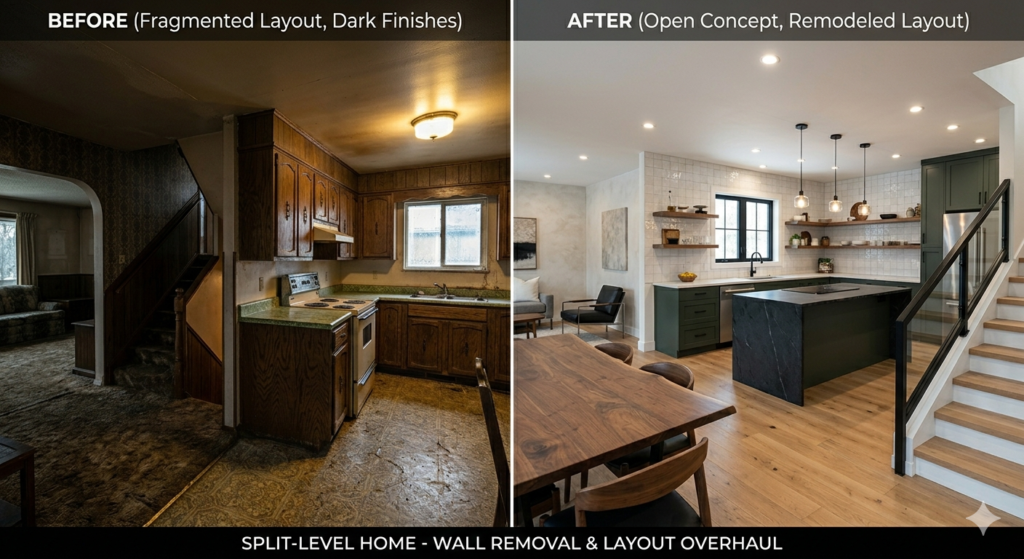
- Remove non-load-bearing walls between kitchen and dining area
- Install a structural beam where a load-bearing wall once stood
- Extend flooring consistently across the newly unified space
- Use kitchen islands or peninsula bars as soft visual dividers
- Align sightlines from the kitchen to the living room for better flow
Tip: Always consult a structural engineer before removing any wall in a split-level home. What appears to be a partition wall may actually carry significant load.
Expanding Kitchen Space
When reconfiguring walls, you can also push the kitchen footprint into adjacent spaces. a former dining nook, a hallway bump-out, or even into the garage in some configurations.
- Borrow square footage from an underused dining area
- Extend into a half-level landing space where structurally feasible
- Add a bump-out addition on the exterior for more floor space
- Reconfigure pantry or closet space to gain kitchen square footage
Adding a Kitchen Island or Peninsula
Islands and peninsulas are particularly valuable in split-level kitchen remodels because they solve two problems at once: they add workspace and they define the kitchen boundary without the need for a wall.
- A fixed island adds counter space, storage, and seating in one element
- A peninsula connects to existing cabinetry and works well in tighter spaces
- Waterfall countertop edges on islands create a modern focal point
- Add pendant lighting above the island to delineate the kitchen zone
- Choose islands with built-in storage to compensate for limited cabinetry
Improving Lighting Design
Lighting is one of the most overlooked elements in a split level kitchen remodel — and one of the most impactful. Poor lighting makes even a freshly renovated kitchen feel dark and small.
- Install recessed LED lighting throughout the ceiling for ambient light
- Add under-cabinet LED strips for task lighting on countertops
- Hang pendant lights above islands or peninsulas for visual interest
- Enlarge or add windows where structurally possible to bring in natural light
- Use light-reflective paint colors and glossy backsplash tiles to bounce light
Modern Cabinet and Storage Solutions
Outdated cabinetry is one of the biggest visual offenders in split-level kitchens. Modern cabinet systems also offer dramatically better storage efficiency than their predecessors from the 1970s and 1980s.
- Floor-to-ceiling cabinetry maximizes vertical storage in rooms with low ceilings
- Flat-panel or shaker-style doors give a clean, contemporary look
- Pull-out drawers and lazy Susans replace inefficient deep corner cabinets
- Open shelving on one wall adds airiness and display space
- Two-tone cabinetry — dark lowers, light uppers — adds depth without heaviness
Can You Open Up a Split Level Kitchen?
This is one of the most common questions homeowners ask when planning a split level home kitchen remodel — and the answer is: usually yes, but it depends on your specific structure.
Split-level homes were built with a mix of load-bearing and non-load-bearing walls. The walls running parallel to your floor joists are generally safer to remove. Walls running perpendicular to joists often carry structural load and require engineering solutions before they can come down.
When Opening the Kitchen Is Possible
- Wall runs parallel to floor joists (likely non-load-bearing)
- A structural engineer confirms the wall can be removed with proper beaming
- Your budget accommodates a structural beam installation ($3,000–$10,000+)
- Local building codes permit the modification with proper permits
When It Gets Complicated
- Wall is load-bearing and sits near a staircase or exterior — more complex engineering required
- Plumbing or major electrical runs through the wall — relocation adds significant cost
- The split level change itself (the stair between levels) limits how far the space can open
- Budget is constrained — structural work can represent 20–30% of total remodel costs
Always hire a licensed structural engineer to assess your walls before any demolition. This step typically costs $500–$1,500 and can save you from costly mistakes.
Best Layout Options for Split Level Kitchen Remodel
Choosing the right kitchen layout is critical in a split-level remodel because your structural constraints may limit your options. Here is a comparison of the most common layouts and how they perform in split-level homes.
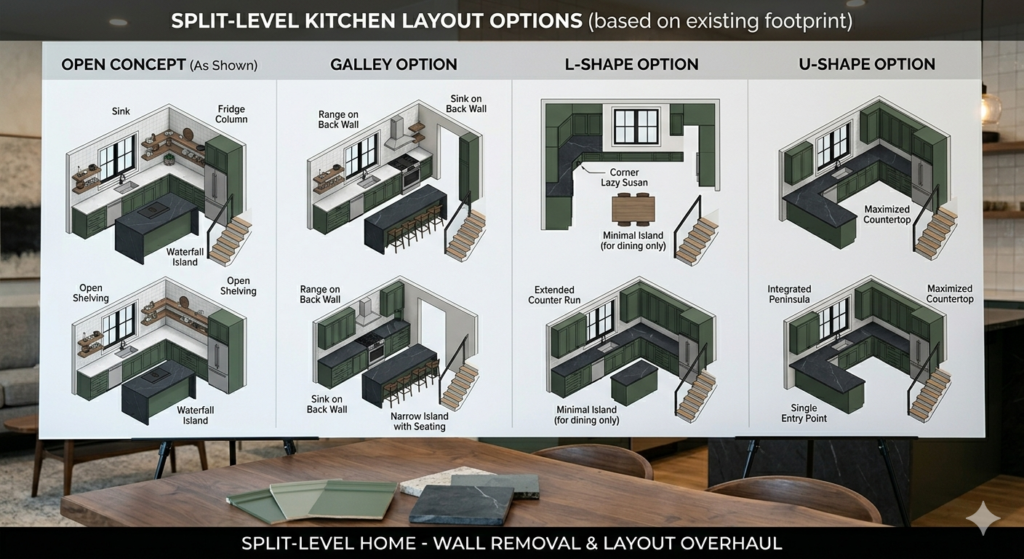
| Layout Type | Best For | Pros | Cons |
| Open Concept | Modern homes, social households | Spacious, great sightlines, increases value | High structural cost, permits required |
| Galley Upgrade | Small, narrow split kitchens | Highly efficient workflow, lower cost | Limited social openness |
| L-Shape | Medium-sized spaces | Flexible, works with islands | May require redesign of cabinetry |
| U-Shape | Larger split-level kitchens | Maximum storage and counter space | Can feel enclosed if not opened up |
For most open concept split level kitchen remodel projects, the L-shape and open concept approaches offer the best balance of aesthetics, function, and structural feasibility. Work with a kitchen designer familiar with split-level homes to determine what your specific structure supports.
Split Level Kitchen Remodel Cost (2026 Breakdown)
Cost is one of the most searched topics around split level kitchen remodels — and for good reason. These projects can range from modest refreshes to major structural overhauls. Here is what you can realistically expect to spend in 2026.
Average Cost Range
The average split level kitchen remodel in 2026 costs between $25,000 and $75,000, depending on the scope of work, your location, and the materials selected. Structural modifications like wall removal and beaming push costs toward the higher end.
Cost Per Square Foot
Kitchen remodel costs typically range from $150 to $400 per square foot in 2026. Split-level kitchens often run higher than this average because of the structural complexity involved.
Budget vs Mid-Range vs Luxury
- Basic remodel (cosmetic updates, new cabinets, counters): $15,000 – $30,000
- Mid-range remodel (layout changes, new appliances, lighting overhaul): $30,000 – $60,000
- High-end remodel (structural work, premium finishes, full open concept): $60,000 – $120,000+
Key cost factors specific to split-level homes:
- Structural engineering and wall removal: $5,000 – $15,000
- Beam installation: $3,000 – $10,000
- Permit fees: $500 – $3,000 depending on municipality
- Flooring transition corrections: $1,500 – $5,000
- Lighting overhaul: $2,000 – $8,000
For a full cost planning framework, visit DF Consulting Services Kitchen Remodel Planning to explore budgeting resources tailored to your project scope.
Step-by-Step Split Level Kitchen Remodel Process
A successful split level home kitchen remodel follows a clear sequence. Rushing any of these steps — especially the planning and permitting phases — leads to costly delays and mistakes.
- Define your goals, must-haves, and budget ceiling before any planning begins
- Assess the structure: identify load-bearing walls, plumbing runs, and electrical panels
- Hire a licensed contractor and/or kitchen designer with split-level experience
- Develop a detailed layout and design plan including cabinet drawings and material selections
- Submit for building permits — required for structural work, electrical, and plumbing changes
- Complete demolition: remove old cabinets, flooring, walls as approved
- Structural construction: install beams, framing, and any level transitions
- Rough-in work: update electrical, plumbing, and HVAC as needed
- Install new cabinets, countertops, backsplash, and appliances
- Complete flooring installation across unified spaces
- Finish lighting, hardware, and paint
- Final inspection and punch list completion
Timeline for a Split Level Kitchen Remodel
Understanding the realistic timeline for your remodel helps you plan around the disruption and set proper expectations with your contractor. Here is what a typical split level kitchen remodel timeline looks like in 2026.
- Planning and goal-setting: 2 – 4 weeks
- Design development and contractor selection: 3 – 6 weeks
- Permitting (varies widely by municipality): 2 – 8 weeks
- Demolition: 1 – 2 weeks
- Structural and rough-in work: 2 – 4 weeks
- Cabinetry, countertops, and finishes: 3 – 6 weeks
- Final inspections and punch list: 1 – 2 weeks
Total estimated timeline: 3 – 6 months for a full remodel with structural changes. Purely cosmetic remodels can be completed in 6 – 10 weeks.
Pro tip: Order your cabinets and appliances early — lead times in 2026 can range from 6 to 16 weeks for semi-custom and custom cabinetry.
Design Trends for Split Level Kitchens in 2026
Split level kitchen designs in 2026 are moving decisively toward warmth, functionality, and connection between indoors and the rest of the home. The best split level kitchen designs this year blend structural openness with rich material choices and smart technology. Here are the dominant trends shaping split level kitchen remodel ideas this year.
📷 [IMAGE PLACEHOLDER: Collage of 2026 split level kitchen design trends — warm palettes, open shelving, smart appliances]
- Warm color palettes: Terracotta, sage green, warm whites, and clay tones replace the cold grays of the previous decade
- Minimalist flat-panel cabinetry with integrated handles for a seamless, modern look
- Smart kitchens with built-in Wi-Fi-enabled appliances, touchless faucets, and integrated lighting controls
- Mixed materials: Combining wood, stone, matte metal, and ceramic for texture and depth
- Open shelving on feature walls as a display and storage hybrid
- Dramatic kitchen islands with waterfall countertops in quartz or leathered marble
- Statement lighting: Oversized pendants and sculptural fixtures over islands
- Hidden storage systems: Pull-outs, deep drawers, and appliance garages keeping counters clear
Mistakes to Avoid in Split Level Kitchen Remodel
Many split level home kitchen remodel projects go over budget or underdeliver because of avoidable planning mistakes. Here is what to watch out for.
- Ignoring structural limits — assuming walls can come down without engineering review
- Poor lighting planning — treating lighting as an afterthought instead of a design priority
- Over-customizing the layout — ultra-specific designs that reduce resale appeal
- Underestimating cost — failing to budget for structural contingencies (add 15–20% buffer)
- Skipping permits — unpermitted work creates legal and insurance complications at resale
- Choosing trendy over timeless — overly trendy materials date quickly
- Neglecting ventilation — split-level kitchens often have poor airflow that needs to be addressed
- Mismatching flooring — failing to plan flooring transitions between the kitchen and adjacent levels
Remodel vs Rebuild: What Should You Choose?
One of the first strategic decisions in a split level house kitchen remodel is determining whether to work within the existing footprint or pursue a more complete structural redesign. Both approaches have merit depending on your home, budget, and goals.
When Remodeling Is the Right Choice
- Your kitchen layout is functional but dated in appearance
- Structural walls make major footprint changes cost-prohibitive
- Your budget is under $40,000
- You plan to stay in the home for fewer than 5 years
- A cosmetic refresh will satisfy your goals
When a Full Redesign Makes More Sense
- The layout fundamentally does not work for your lifestyle
- You are planning a long-term stay and want maximum livability
- Structural changes are feasible and within budget
- Neighboring homes have been significantly updated, affecting your property value
- You want to pursue an open concept split level kitchen remodel for maximum impact
Pro Tips for a Successful Split Level Kitchen Remodel
After working through dozens of split-level home kitchen remodels, experienced designers and contractors share consistent advice that separates great projects from expensive disappointments.
- Prioritize layout first a beautiful kitchen with a bad layout will frustrate you every day. Get the flow right before choosing finishes.
- Focus on lighting upgrades, no single investment improves a split-level kitchen’s feel more dramatically than proper layered lighting.
- Keep the workflow efficient, the classic work triangle (sink, refrigerator, stove) still holds. Maintain reasonable distances between these three points.
- Balance open and functional space — fully opening the kitchen is not always the right choice. Partial openings with smart transitions can work beautifully.
- Hire trade professionals with split-level experience — not every contractor understands the structural nuances of these homes.
- Protect your resale value — make bold design choices in finishes, not in irreversible structural decisions.
Looking for experienced remodel consultants? Visit DF Consulting Services to connect with professionals who specialize in split-level home renovations.
Split Level Kitchen Remodel Checklist
Use this master checklist to keep your project organized from start to finish. Print it out or save it as a project reference.
Planning Phase
- Set a realistic budget with a 15–20% contingency buffer
- Define your non-negotiable goals and your nice-to-haves
- Research local building codes and permit requirements
- Gather split level home kitchen remodel pictures for inspiration
Design Phase
- Hire a kitchen designer or design-build contractor
- Get a structural engineering assessment for any wall removal
- Finalize layout and produce cabinet drawings
- Select all materials: cabinets, countertops, backsplash, flooring, hardware
- Plan lighting design across all three layers: ambient, task, accent
Budget Phase
- Get three contractor bids and compare scope carefully
- Confirm appliance and material lead times
- Allocate contingency budget for structural surprises
- Set up a project payment schedule tied to milestones
Execution Phase
- Pull all required permits before demolition begins
- Establish a temporary kitchen setup if needed
- Review work at each major milestone: framing, rough-in, cabinet installation
- Document progress with photos
Final Touches
- Complete punch list before releasing final contractor payment
- Schedule and pass final building inspection
- Install hardware, lighting fixtures, and finish details
- Deep clean and style the new kitchen
FAQs: Split Level Kitchen Remodel
A split level kitchen remodel costs between $25,000 and $75,000 on average in 2026. The wide range reflects differences in scope — a cosmetic refresh with new cabinets and countertops runs $15,000–$30,000, while a full structural open concept conversion with premium finishes can exceed $100,000. Structural work like wall removal and beam installation is the biggest cost driver unique to split-level homes.
Yes, you can remove walls in a split-level home, but you must determine whether the wall is load-bearing first. Non-load-bearing walls can be removed relatively simply. Load-bearing walls require a structural beam to replace the support they provide, adding $3,000–$10,000 or more to the project. Always hire a structural engineer to assess the wall before demolition begins
A full split level kitchen remodel with structural changes typically takes 3 to 6 months from planning to completion. Purely cosmetic remodels — new cabinets, counters, flooring, and lighting without structural work — can be completed in 6 to 10 weeks. The permitting phase alone can take 2 to 8 weeks depending on your municipality.
Yes — a split level kitchen remodel is one of the highest-ROI home improvement projects you can undertake. Kitchen remodels consistently return 60–80% of their cost at resale, moreover in split-level homes specifically, modernizing and opening the kitchen can significantly improve marketability. in a segment of the housing stock that is often perceived as outdated. Beyond resale, the daily livability improvement is substantial.
The best layout for a split level kitchen depends on your structural constraints and goals. An open concept conversion is the most impactful choice when structurally feasible. For smaller or more constrained spaces, an L-shaped layout paired with a kitchen island provides an excellent balance of openness and storage. Galley layouts work well when the kitchen is narrow and lengthening the run is possible.
The top split level kitchen designs in 2026 feature open concept layouts, warm color palettes, flat-panel cabinetry, dramatic kitchen islands, and smart appliance integration. Mixed material combinations — wood accents with stone countertops and matte metal fixtures — are particularly popular. Lighting design has become a centerpiece of these remodels, with layered systems combining recessed, pendant, and under-cabinet sources.
Conclusion
A split level home kitchen remodel is one of the most rewarding home improvement investments you can make — but it requires careful planning, realistic budgeting, and the right professional team. The key is to start with your layout and structural realities, build a clear design vision around them, and execute methodically from permits through final inspection.
Whether you are pursuing a dramatic open concept transformation or a focused modernization of cabinets, lighting, and finishes, the result will be a kitchen that finally matches the way you live today. The split-level homes of the 1960s and 70s were built for their era. With the right remodel, yours can shine in 2026 and well beyond.
Ready to get started? Contact DF Consulting Services to discuss your split level kitchen remodel project with an experienced consultant.